
Carlisle City Directory Holdings
Carlisle city directory research begins with a holding, not an assumption that every year or section survived. Bosler Memorial Library has a cataloged physical R.L. Polk run that began in 1924, while other year leads require confirmation with the particular repository. The Cumberland County Historical Society, often called CCHS or Gardner Library, has locally relevant city directories within a much broader closed-stack collection. The Library of Congress provides a separate digitized telephone-directory group. These are different collections with different scopes, and none should be treated as a complete current roster.
| Collection | Verified period | Where held | Access route |
|---|---|---|---|
| Carlisle directory lead set | 1869; 1871-1875; 1876/77; 1924-1960 with gaps | Established genealogy catalog leads and possible CCHS copies | Confirm the specific year and section before travel |
| R.L. Polk Carlisle volumes | Began 1924; verified intermittent physical volumes, 1942-2017 | Bosler Memorial Library Ready Reference | Cataloged physical copies, not a continuous run |
| Carlisle telephone directories | May 1952; April 1953-1958 | Library of Congress | Digitized white and yellow pages online |
| CCHS Library & Archives | No complete public year inventory located | 21 N. Pitt Street, Carlisle | Appointment and staff-assisted collection search |
The Bosler catalog lists intermittent labels including 1942, 1953-54, 1955-56, 1957, 1959-61, 1963-70, 1972-82, 1984-87, 1990-92, 1994-98, 2000, 2009, 2012, and 2017. It does not show pages or establish that a given volume has a street section. Ask for the volume itself and inspect it.
The Bosler Memorial Library reference-collection page is the source for this Carlisle city directory image.
Use the catalog and the volume together, because the catalog record alone cannot reveal how a particular entry or index was arranged.
Carlisle City Directory Research Rooms
CCHS is the principal Carlisle genealogy and archival library for a historical household question. Its collection includes more than 40,000 published volumes along with manuscripts, family histories, business records, newspapers, church and cemetery material, and Carlisle Indian Industrial School resources. Visits are by appointment. Nonmembers pay five dollars per day, while students with identification and members enter without that daily charge. Carlisle-area County Library System cardholders may borrow the CCHS/CCLS pass through a system branch. CCHS publishes copy charges of fifty cents per paper or microfilm-reader copy and five dollars for a personal camera or phone visit.
The Cumberland County archival-resources directory identifies the institutions represented by this Carlisle city directory image.
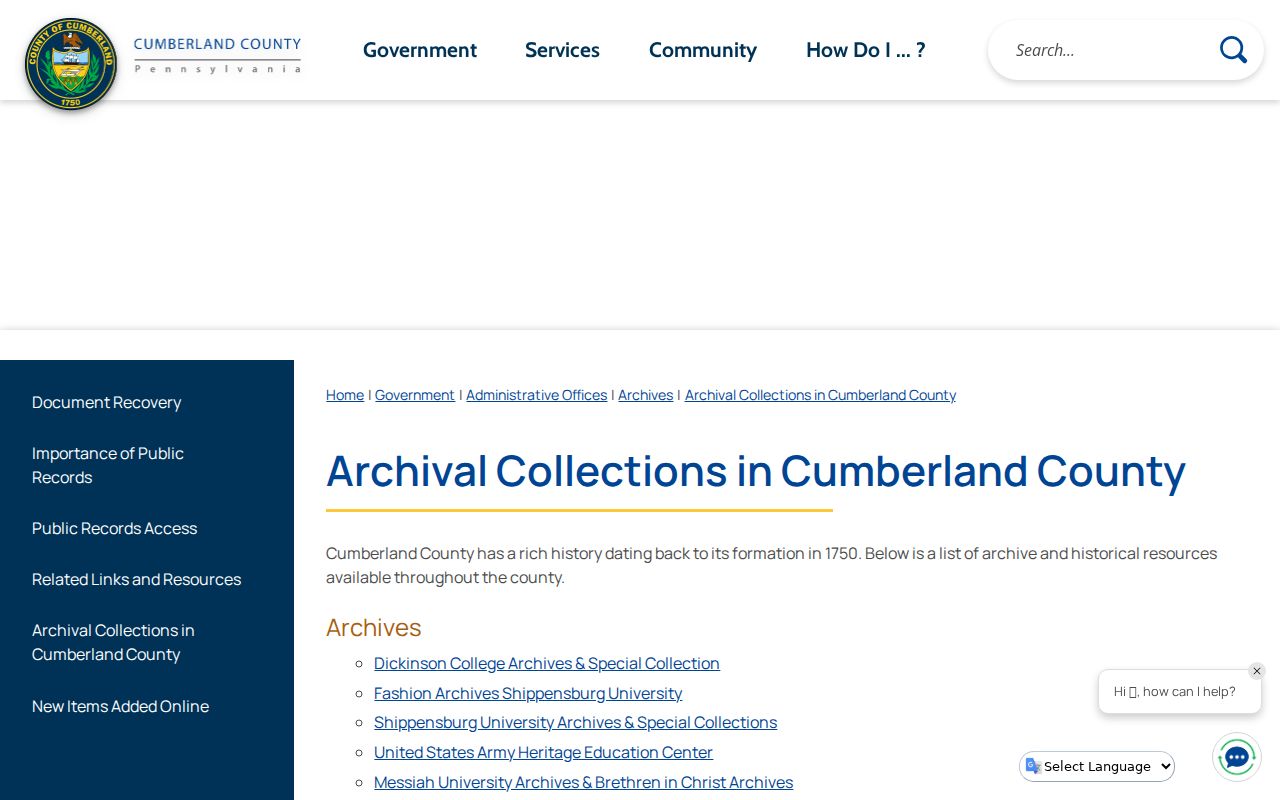
That county directory helps separate local-history, college, military, and county-government repositories before a request is sent.
County Archives is a different shelf. It preserves non-active permanent county records, primarily those before 1950, and offers Local Listings for scanned material plus appointments for material not online. A directory listing may point toward a deed or tax question, but the County Archives holds official county-created records rather than a general local-history library.
The Cumberland County Archives overview is the source for this Carlisle city directory image.
When a record is not in a city directory, use the archive's separate access route rather than assuming the listing is lost.
Note: Appointment, access, and copying terms can change, so confirm them with the repository before a visit.
Carlisle City Directory Year Leads
The verified Carlisle lead set is useful for planning a search, not for claiming an unbroken run. It includes 1869, 1871 through 1875, 1876/77, 1924 through 1931, 1933-34, 1936-42, 1946-47, 1949, 1951-57, and 1959-60. The source is an established genealogy catalog lead, so local availability still needs a call or catalog check. Bosler's separate Polk record began in 1924 and provides verified physical-volume labels later in the century. A missing year may reflect a publication gap, a catalog gap, or a holding gap.
Tax books can provide a useful Carlisle companion when the goal is to place a name in an assessment district rather than to recreate a directory entry. Cumberland County Archives describes 155 tax-rate volumes covering 1736 through 1930, arranged by municipality and alphabetical surname grouping. They include Carlisle town but lack a unified index, so they should be read as tax evidence rather than proof of a full household.
The County Archives tax-rate books series is the source for this Carlisle city directory image.
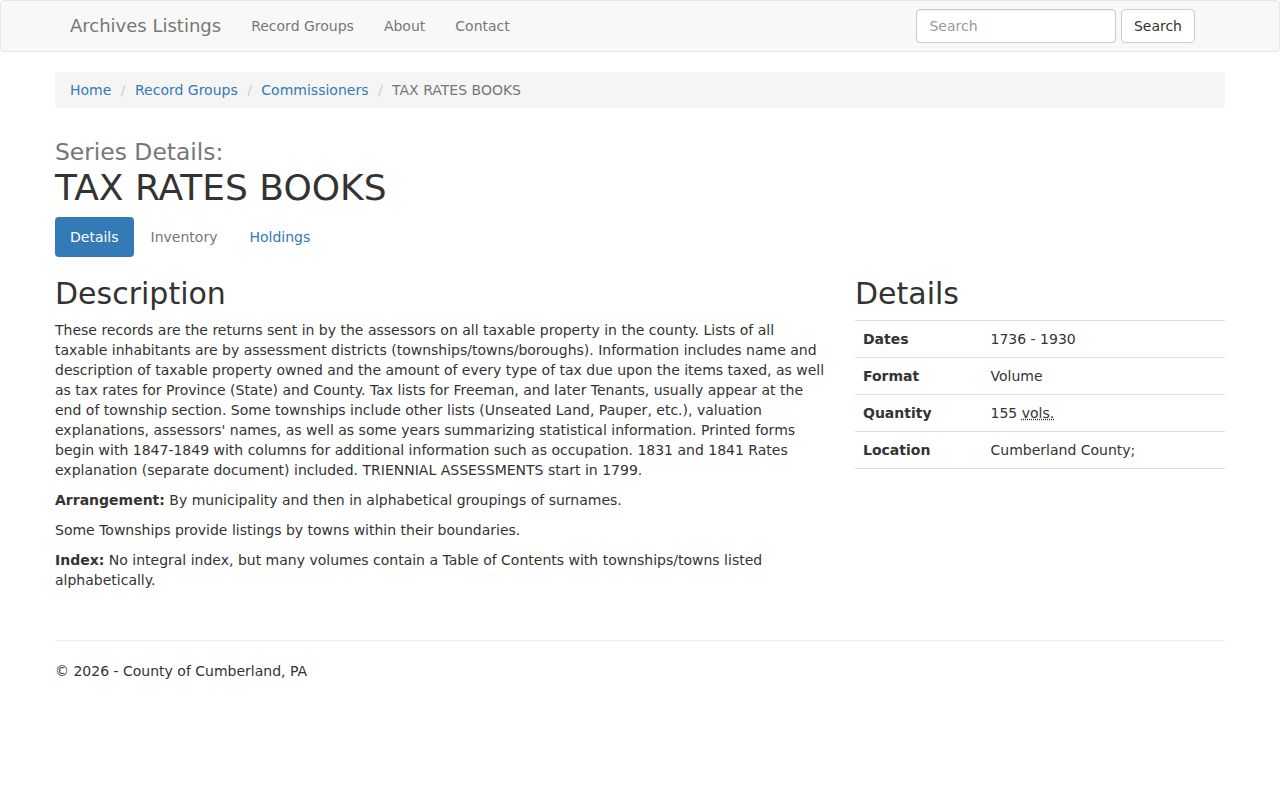
Use the municipality and surname grouping in those books to build a dated lead, then confirm the person in the appropriate directory or other record.
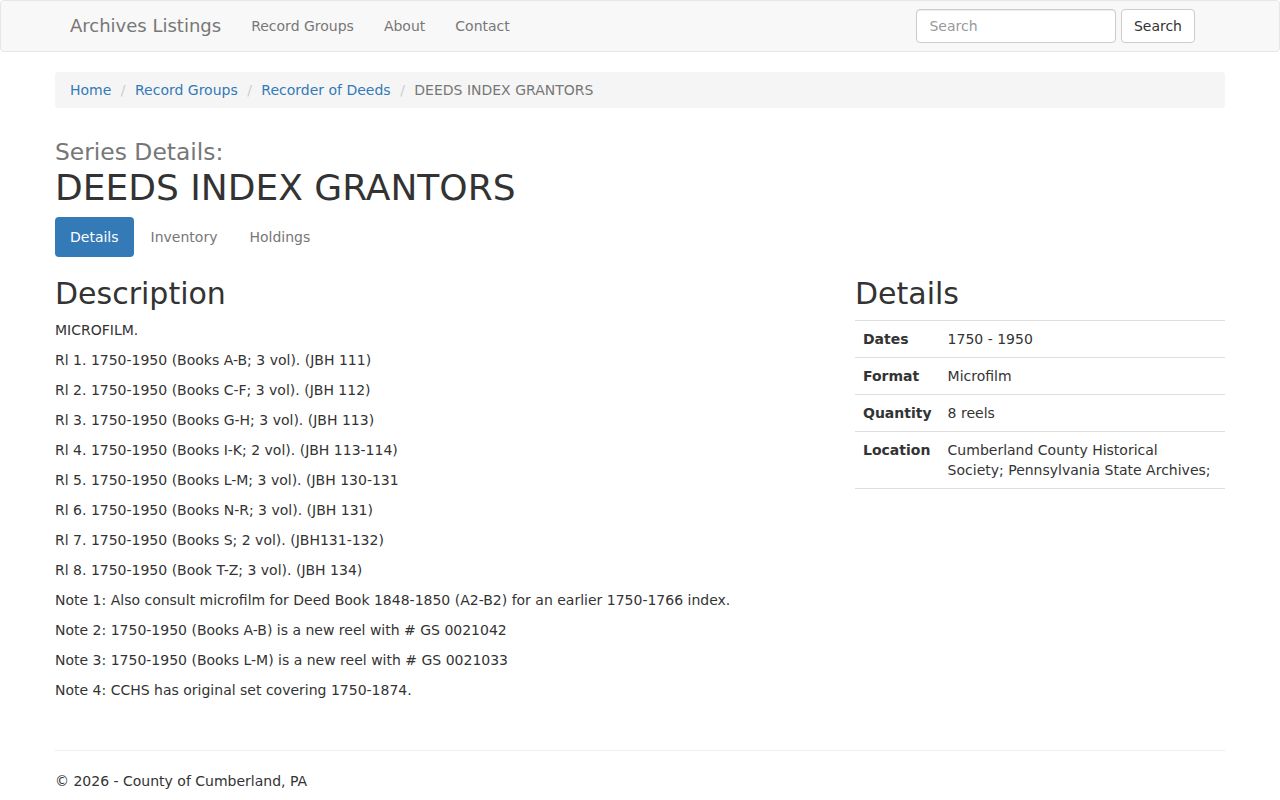
Historic deeds are another companion source. County Archives describes a Deed Grantors Index on microfilm from 1750 through 1950, while CCHS holds an original index set for 1750 through 1874. These sources follow land parties and legal descriptions, not directory-style household listings.
The historic Deed Grantors Index description is the source for this Carlisle city directory image.
A legal description can bridge an address question when an older printed listing uses a street form that later changed.
Carlisle City Directory Telephone Volumes
The Library of Congress collection is an actual digitized Carlisle telephone directory, not a Polk city directory. It includes May 1952 and April editions from 1953 through 1958. The covers and entries extend to nearby points, so its geographic scope is wider than an exact Carlisle Borough roster. It is still valuable because it lets a researcher inspect a real local printed entry rather than inventing what an entry might have looked like.
The Library of Congress Carlisle telephone-directory text is the source for this Carlisle city directory image.

In the inspected white pages, entries place surname first, then given name or initials, a residence mark such as r, an address or rural-route wording, and a telephone number when printed.
Read a Carlisle City Directory Entry
Start with the actual volume's title page. Record the full title, publisher, publication or compilation year, geographic scope, and the call number or stable link. Then read the abbreviation key before interpreting a symbol. The telephone-directory example confirms an r residence mark, but it does not supply a universal key for Polk or other volumes. A Carlisle city directory entry may reveal a name form, street location, business wording, or a household clue, but each field must be treated as printed evidence for that edition.
| Name line | Copy the surname, forename, initials, title, and spelling variant exactly as printed. |
|---|---|
| Household clue | Record a spouse in parentheses, widow notation, adult-child or boarder wording only when it appears. |
| Location | Preserve the house number and street form, and compare it with any street section only after confirming that section exists. |
| Work text | Transcribe an occupation, business, or affiliation as printed. Do not infer a later status from it. |
| Address mark | Use an owner, renter, room, or boarding mark only if the volume's own key defines it. |
- Criss-cross directory
- A possible address-to-listed-person section arranged by street and number. Its presence must be checked in each Carlisle volume.
- Householder index
- An index that points to a household name or entry. It is not necessarily a list of every person at an address.
- Abbreviation key
- The volume's explanation of its own printed shorthand. Photograph or transcribe it before assigning meaning to a mark.
Note: A city directory records compiled presence for its own issue date, not title, complete household membership, or present residence.
Carlisle City Directory Confirmation Paths
A Carlisle historical listing can be a starting point for a narrower question, such as whether a later civil filing, court record, or state custody record exists in its proper public channel. Those records have their own scopes and exclusions. The county civil portal is not a city directory, and an absence from it cannot erase a directory observation. Keep the printed entry, date, and independent record separate until identifiers genuinely align.
The Cumberland OnBase civil-records portal is the source for this Carlisle city directory image.
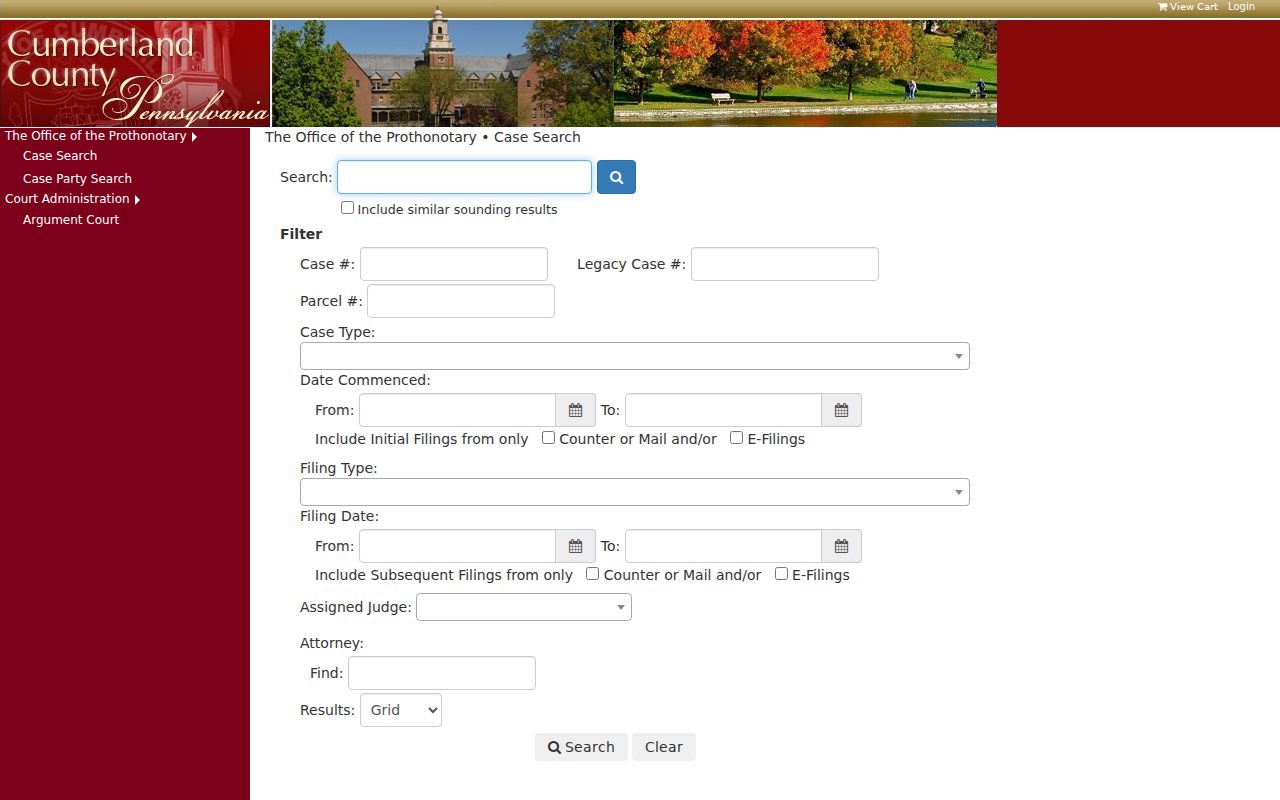
OnBase can search post-1994 civil records by case number or whole or partial party name, but its docket result is a different kind of evidence.
The county searchable-civil-records explanation is the source for this Carlisle city directory image.
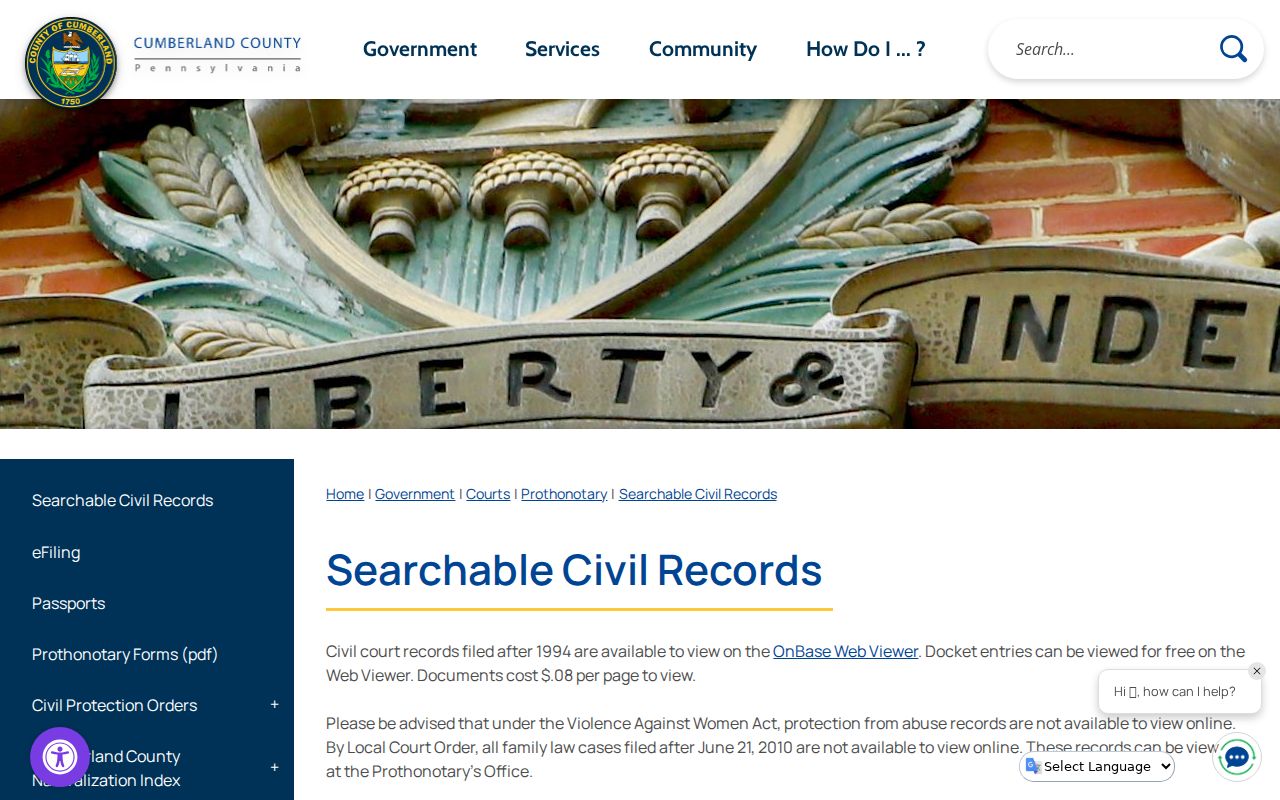
Use the named clerk or portal for a specific public record, rather than turning a historic listing into a claim about a person's present circumstances.
The Cumberland criminal-record-search service is the source for this Carlisle city directory image.
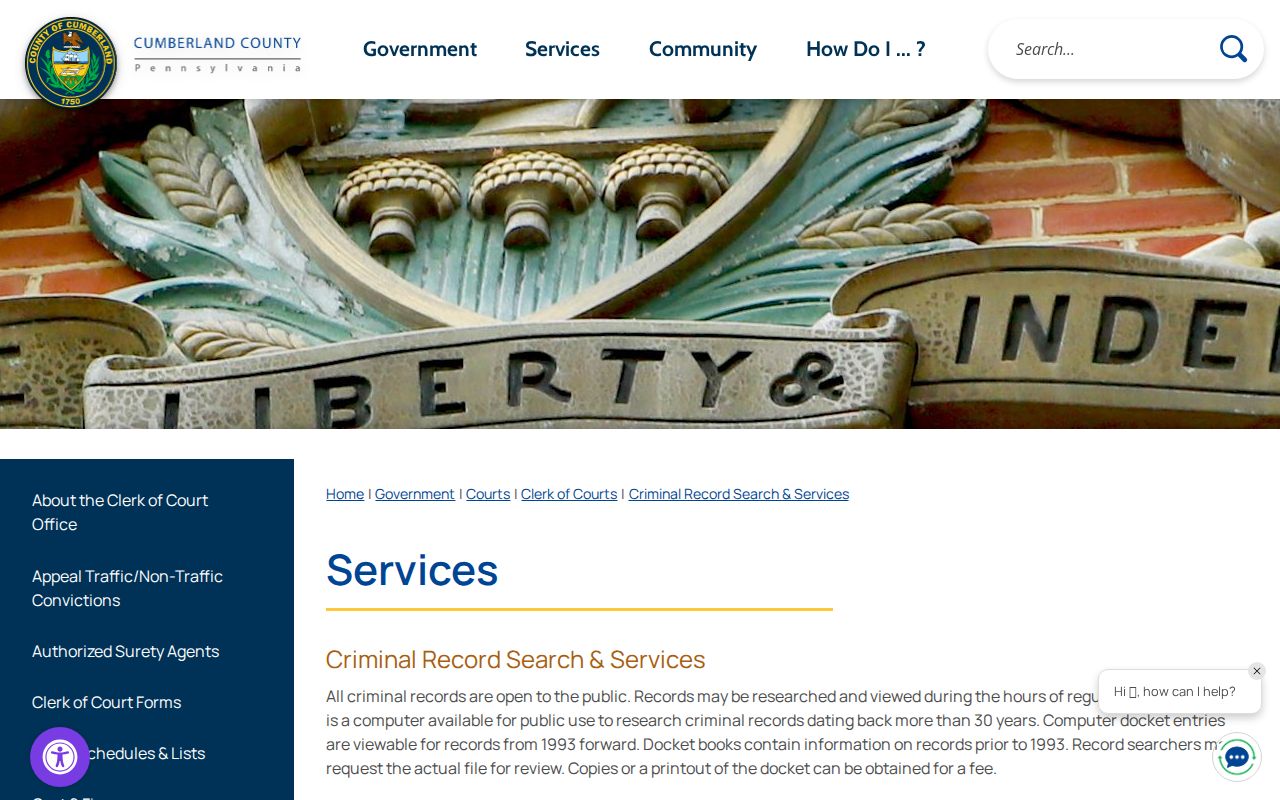
The Clerk of Courts describes its own counter and record procedures, while juvenile and other nonpublic material remains outside ordinary public access.
The Pennsylvania DOC locator is the source for this Carlisle city directory image.
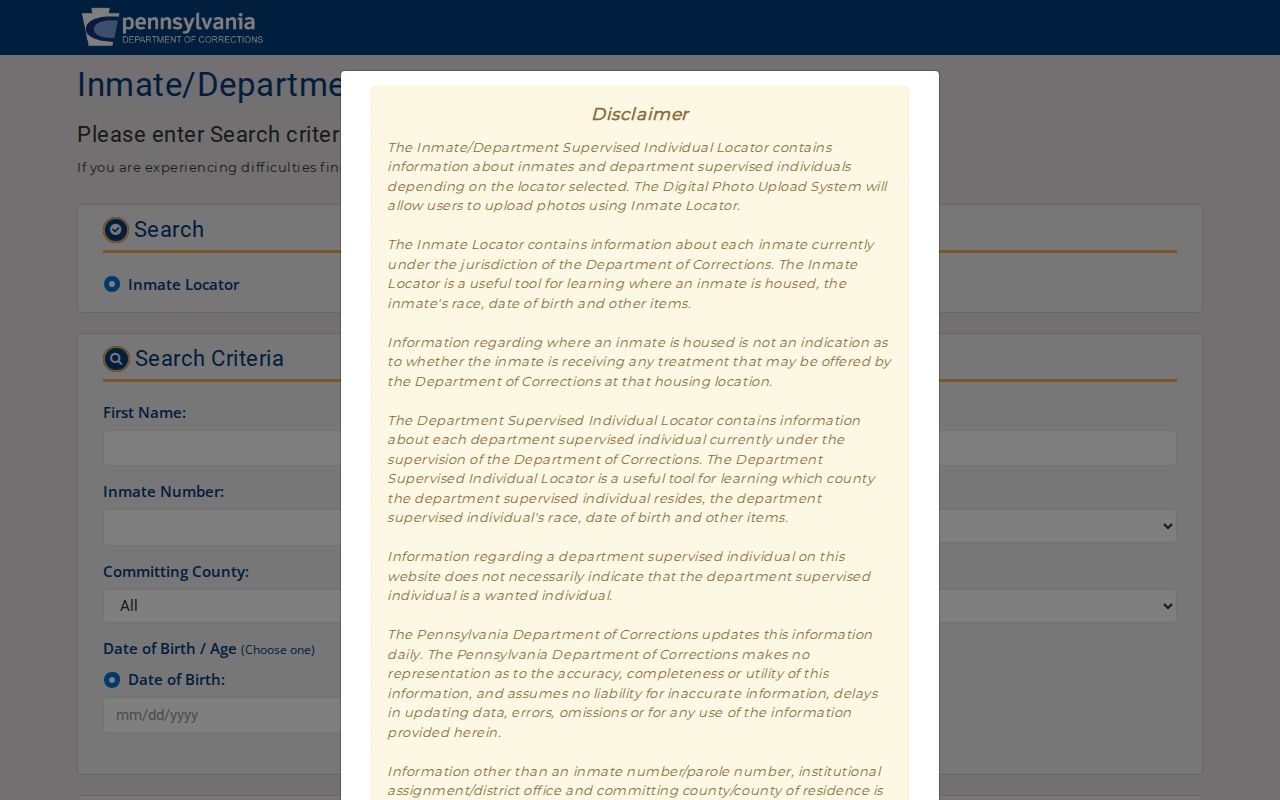
A custody locator has its own limited purpose and is never a substitute for a family-history directory or a complete court history.
Carlisle City Directories With Maps
Pair a Carlisle directory observation with the nearest released federal census, but label the two dates separately. In 2026, the 1950 census is the latest released population schedule. A census is a household snapshot taken on its enumeration date, while a directory was compiled on another schedule and may use a different address form. Newspapers and obituaries at CCHS can supply another dated lead, particularly its digitized Carlisle Evening Sentinel obituary index for 1906 through 1915.
For the physical setting, the Library of Congress holds Carlisle Sanborn map sets for 1885, 1890, 1896, 1902, 1909, 1915, and 1923. The September 1902 set has 16 sheets. These maps can confirm a building footprint, street layout, or property-use context, but they do not name every resident. When an address is uncertain, compare the map, deed legal description, and the printed street form before joining two entries.
Modern parcel work belongs with the Carlisle street directory, where the address and deed chain are handled in full.
Trace Families in Carlisle City Directories
Follow a household through adjacent available editions, not just through the first surname hit. Search surname variants and initials. Compare the alphabetical section with a street or criss-cross section only if that copy contains one, then read the short street segment around the address. A listing that appears, moves, or disappears is a research event that needs a date and a second source. The most useful sequence pairs the printed volume with a released census, maps, and then newspapers or probate material where public.
- Identify the earliest verified Carlisle volume likely to contain the surname, then copy its title, year, and full printed name form.
- Inspect the entry and the volume's abbreviation key, recording address, household wording, and any work text exactly as printed.
- Check the next available edition on each side of that year and note whether the address, spelling, or household clue changes.
- Inspect a street section only when the copy actually has one, and read nearby numbers rather than relying on one index hit.
- Pair each dated observation with the nearest released census, a Sanborn sheet, and a public obituary or estate source when needed.
If a household vanishes, it may have moved, died, changed spelling, been missed by compilation, or fallen outside a new coverage area. The conclusion should remain open until another record supports one explanation.
Carlisle City Directory Institutional Leads
Carlisle's historical geography adds repositories that are focused rather than universal. County Archives lists Dickinson College Archives & Special Collections and the U.S. Army Heritage and Education Center among local archival institutions. Dickinson's digitized Microcosm yearbooks cover 1868 through 2018 with text and decade searching. They are useful for former-student or alumni questions, not for a list of everyone who lived in the Borough. USAHEC offers catalog-led online or appointment research for a defined military-history question.
The U.S. Army Heritage and Education Center is the source for this Carlisle city directory image.

Search the catalog or ask staff with a specific name, year, and collection question rather than requesting a general resident list.
The Dickinson Microcosm yearbook collection is the source for this Carlisle city directory image.
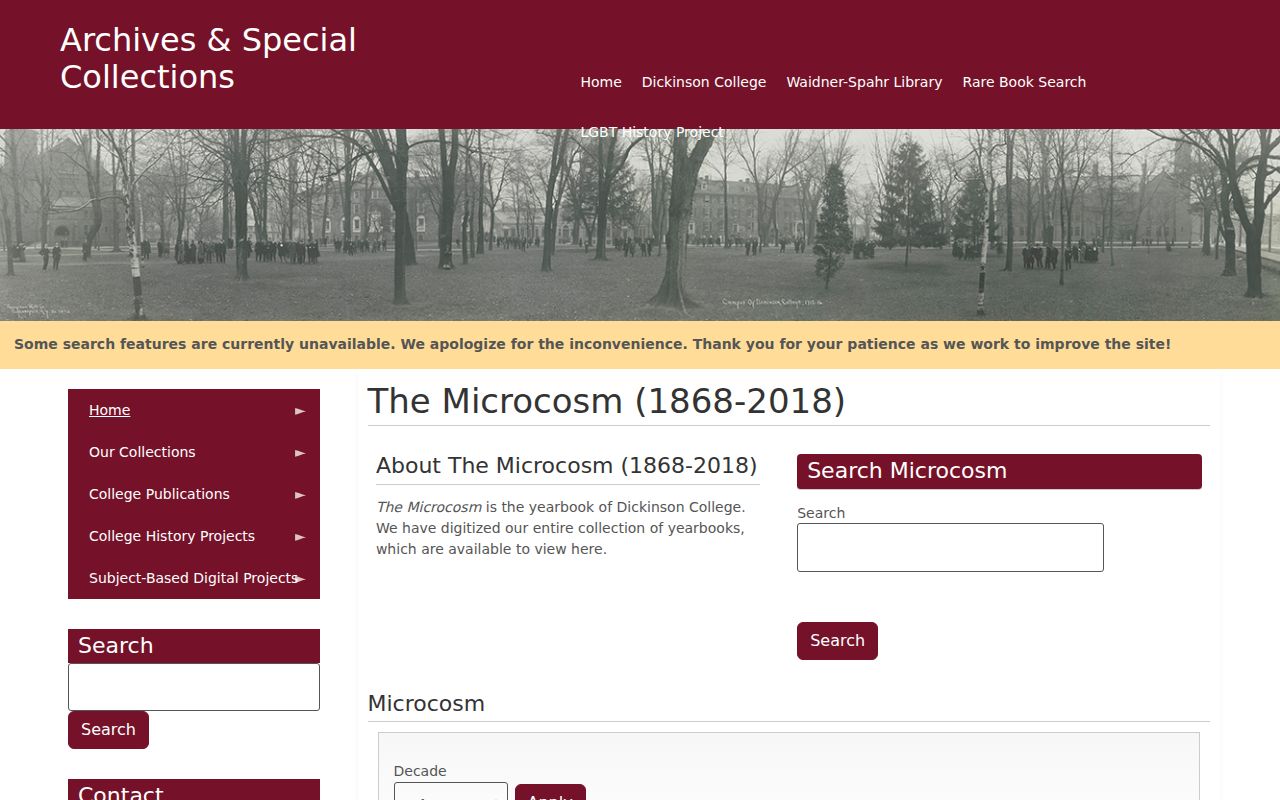
Yearbooks can strengthen a dated affiliation lead when the printed directory itself is incomplete or absent.
The Carlisle Indian School Digital Resource Center is the source for this Carlisle city directory image.
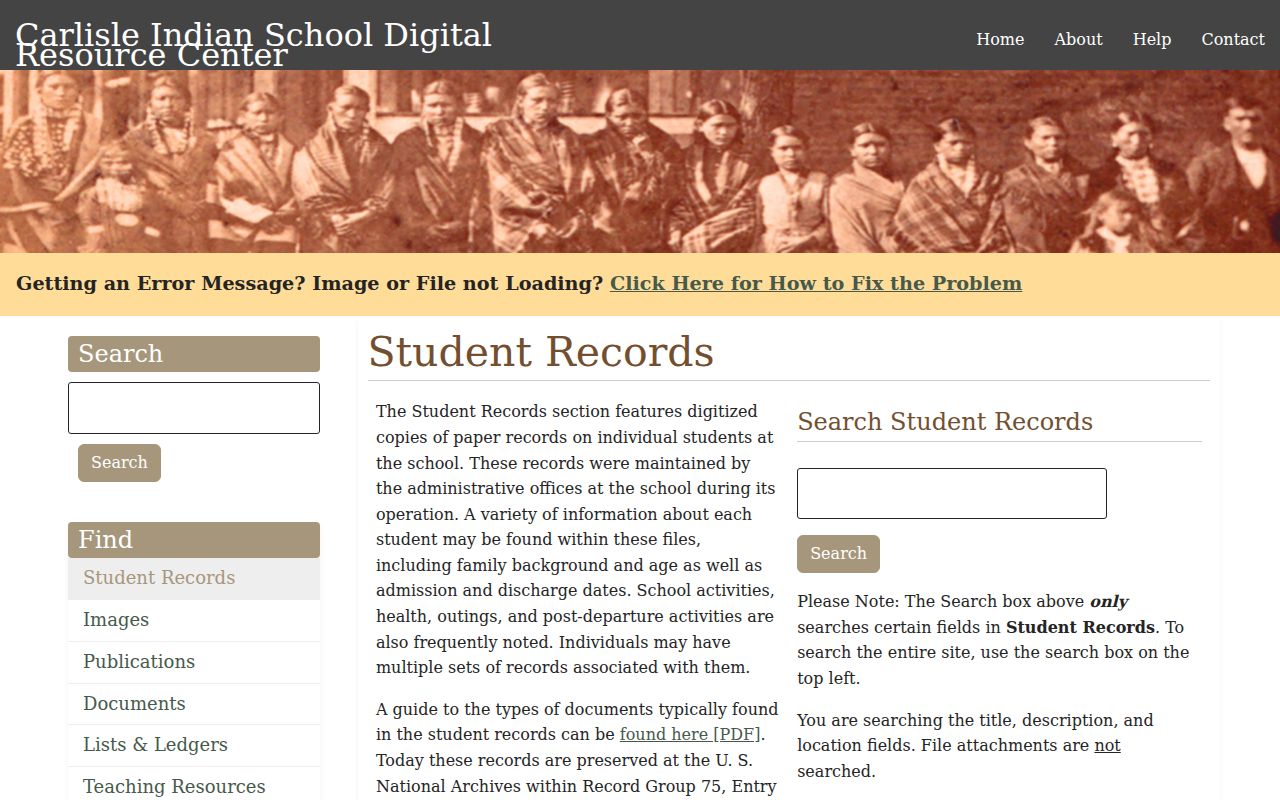
The school collection covers material from 1879 through 1918 and must be used sensitively; it is a focused historical resource, not a present-day resident index.
Carlisle City Directory Preservation Context
Carlisle's county-seat history explains why related official records are close at hand, but it does not guarantee a complete volume or a person-level match. The 1845 Carlisle courthouse fire spared the Recorder holdings according to Recorder history, and those documents were reportedly hidden during the 1863 Confederate invasion. The same history describes paper index books through computerized indexing in December 1993, the end of paper books in 2001, and transfer of historic books to County Archives in 2017. These changes matter when a directory address leads to a land question.
| Period | Record-keeping event |
|---|---|
| 1845 | The Cumberland courthouse burned; County history says stored records were saved and the courthouse was rebuilt in 1846. |
| 1863 | Recorder history says its documents were hidden during the Confederate invasion. |
| December 1993 | Computerized Recorder indexing began after the era of separate paper index books. |
| 2001 | Paper record books stopped, with current documents retained by imaging and electronic methods. |
| November 2017 | Historic Recorder books moved to County Archives for long-term preservation. |
One historical detail deserves care: Deed Book 1L, dated 1794 through 1796, includes manumissions. It shows that early record books document more than parcels and carry difficult historical context. In 2025, the county also reported preservation work involving 3,989 constable-return documents, 240 marriage dockets, and more than 6,000 administrator or executor account papers. The report signals active preservation, not a claim that each item can be searched online.
Note: Treat a missing search result as a reason to ask the right custodian about a defined record group, year, and name.